What Is Marijuana Anonymous?
Marijuana Anonymous (MA) is a free, peer-support fellowship modeled on the 12-Step framework of Alcoholics Anonymous, adapted specifically for people whose lives have been affected by cannabis use. MA has been helping people recover since 1989 and offers both in-person and online meetings around the world.
The core premise is simple: people who have experienced cannabis dependence are uniquely positioned to help each other recover. MA is not therapy, it's not treatment, and it's not led by professionals. It's a community of people who share a common problem and work together toward a common solution.
The Only Requirement
"The only requirement for membership is a desire to stop using marijuana." You don't need to have quit already. You don't need to have hit "rock bottom." You don't need to be sure. You just need to want to stop. That's the only door you need to walk through.
How MA Works
The 12-Step Framework
MA follows the same 12-Step model used by Alcoholics Anonymous, Narcotics Anonymous, and other recovery fellowships. The steps provide a structured path through recovery that addresses not just the substance use but the underlying patterns of thinking and behavior that support it.
The 12 Steps involve acknowledging that cannabis use has become unmanageable, seeking support (from the group and from a "higher power" as you understand it), making an honest inventory of how use has affected your life and relationships, and building new patterns of living.
A common concern about 12-Step programs is the spiritual component. MA addresses this directly: the "higher power" can be anything greater than yourself — the group itself, nature, the universe, a traditional concept of God, or simply the collective wisdom of people who have recovered. It does not require any specific religious belief.
Meetings
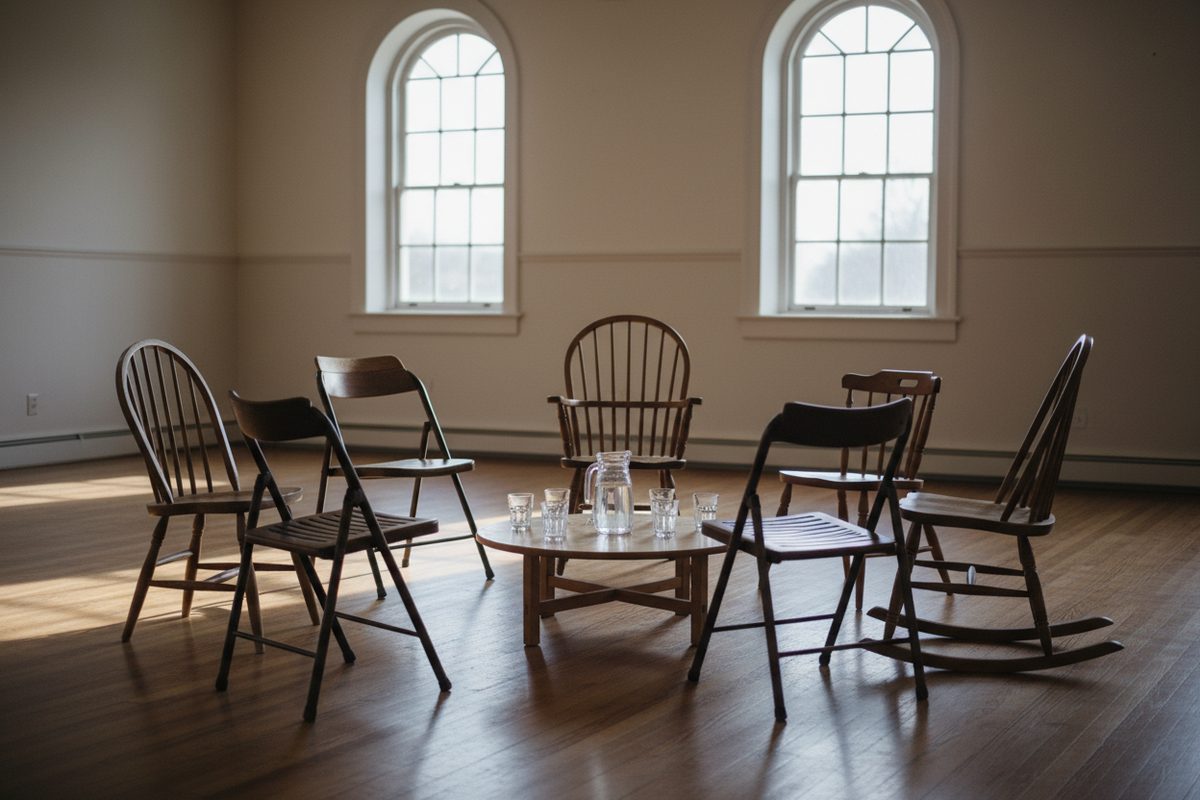
MA meetings are the core of the program. They typically last about an hour and involve members sharing their experiences — what their use was like, what happened, and what recovery looks like. Some meetings focus on specific topics or steps; others are open-format sharing meetings.
Meeting types:
- In-person meetings: Held in community centers, churches, libraries, and similar venues. Available in many cities, though coverage varies by region.
- Online meetings: Available via phone and video platforms. These have expanded significantly and are accessible from anywhere. This is a great option if there are no in-person meetings near you, or if you prefer the privacy of attending from home.
- Open meetings: Anyone can attend, including people who are just curious or supporting a loved one.
- Closed meetings: Only for people who identify as having a problem with cannabis.
Find a meeting near you or online: MA Meeting Finder
Sponsorship
A sponsor is a more experienced member who guides you through the steps and provides one-on-one support. Having a sponsor means having someone you can call when you're struggling, someone who has been where you are and made it through. Sponsorship is voluntary but strongly encouraged.
MA's 12 Questions Self-Assessment
MA has developed a set of 12 questions to help people evaluate whether their cannabis use has become a problem. These questions are not a clinical diagnostic tool, but they can be a useful starting point for self-reflection. Questions include things like whether cannabis has interfered with your job or responsibilities, whether you've tried to cut down and failed, and whether you've used cannabis to deal with problems or emotions.
You can find the full 12 Questions on the MA website. You can also use our self-assessment tool which is based on the clinical DSM-5 criteria.
MA Literature
MA has published its own recovery literature, adapted from the broader 12-Step tradition but specific to cannabis:
- Life with Hope — MA's primary text, similar to AA's "Big Book." Contains the program's philosophy, recovery stories, and practical guidance for living without cannabis.
- A Twelve Step Workbook — A companion workbook that guides you through each step with writing exercises and reflection questions. Many people use this with their sponsor.
Both are available through the MA website and at meetings.
What to Expect at Your First Meeting
Walking into your first meeting is the hardest part. Here's what typically happens:
- You'll be welcomed. MA members remember their own first meeting and understand the courage it takes to show up. Someone will likely introduce themselves and help you feel at ease.
- You don't have to speak. At most meetings, sharing is voluntary. You can sit and listen for as many meetings as you need before you're ready to say anything. A simple "I'm just here to listen today" is perfectly acceptable.
- You'll hear stories that sound familiar. One of the most powerful aspects of your first meeting is hearing other people describe experiences you thought were uniquely yours. The relief of realizing you're not alone is profound.
- It's confidential. What is shared in meetings stays in meetings. This is a foundational principle of all 12-Step programs.
- It's free. MA has no dues or fees. A basket may be passed for voluntary contributions to cover meeting costs (rent, refreshments), but contributing is entirely optional and there is never pressure to give.
- You can leave whenever you want. If it doesn't feel right, you're not obligated to stay. But try to give it at least a few meetings before deciding — the first one is often the most uncomfortable, and it gets easier.
You don't have to have it all figured out. You don't need to know if MA is right for you before you try it. You don't need to commit to anything. You just need to show up once and see how it feels. That's it.
Is MA Right for You?
MA works well for people who:
- Want a structured, time-tested framework for recovery
- Value community and peer support
- Are open to (or at least willing to explore) a spiritual or philosophical component
- Want ongoing, long-term support rather than a time-limited program
- Benefit from hearing others' stories and sharing their own
MA may not be the best fit if you prefer a strictly science-based, non-spiritual approach. In that case, SMART Recovery offers a cognitive-behavioral alternative that may suit you better. Many people try both and find what works for them.
Marijuana Anonymous is a free, peer-support program modeled on the 12-Step framework. MA offers both in-person and online meetings, and the only requirement for participation is a desire to stop using cannabis.
Marijuana Anonymous
For evidence-based cannabis education, visit our companion site TryCannabis.org
Related on this site: SAMHSA Cannabis Hotline & Crisis Reso..., Find a Cannabis Therapist & Canna..., Quit Weed Reddit.